Solar Generator vs. Gas Generator: Which Is Right for Florida Homes?
By Hilario Herrera · Last updated ·Research-based guide · Some links are paid links (disclosure).
Quick picks
- Best overall solar generator for Florida homes: EcoFlow Delta Pro — 3.6kWh expandable, powers a fridge and fans through a multi-day outage
- Best budget solar generator: Jackery Explorer 1000 v2 — solid for phones, laptops, CPAP, small appliances
- Best gas/dual-fuel generator for whole-home backup: Champion 12.5kW Dual Fuel — runs AC and well pump
- Best portable gas generator: Honda EU2200i — quiet, reliable, easy to store
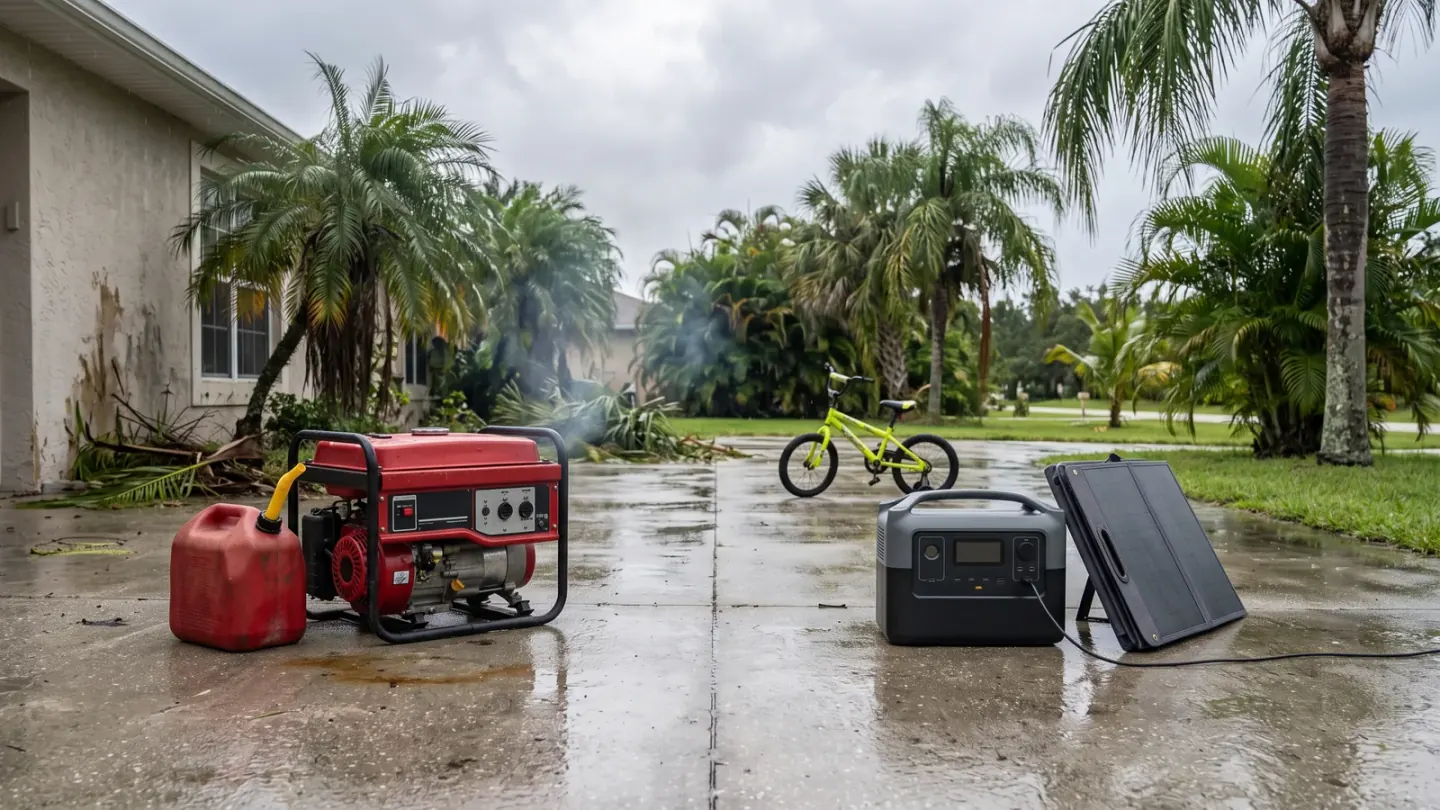
Florida households sit in a unique spot: hurricane season runs June through November, outages can last days to weeks, and heat makes losing AC or refrigeration a real health risk. The choice between a solar/battery power station and a traditional gas generator comes down to how long you expect to be without grid power, what you need to run, and how much noise and fuel logistics you’re willing to deal with.
How they actually differ
| Factor | Solar Generator (Battery + Panels) | Gas Generator |
|---|---|---|
| Startup | Instant, silent, automatic in some models | Manual pull-start or electric start, takes minutes |
| Noise | Silent | 50-75 dB, audible for neighbors |
| Fuel | Sunlight (free, but slow to recharge) or wall outlet | Gasoline/propane, needs stockpiling or runs |
| Runtime for AC/well pump | Limited without large battery banks | Strong — most window/mini-split ACs need 15-20A generators |
| Maintenance | Minimal, no moving parts | Oil changes, carburetor issues after sitting unused |
| Indoor use | Safe indoors | Never indoors — carbon monoxide risk |
| Upfront cost | $800-$3,500+ | $400-$3,000+ |
| Lifespan | 500-3,000+ battery cycles (8-15 years) | 1,000-5,000 hours with maintenance |
Where solar generators win
For most Florida homeowners riding out a 1-3 day outage, a solar power station covers the essentials: refrigerator cycling, phone and laptop charging, box fans, a CPAP machine, Wi-Fi router, and lighting. Because there’s no combustion, you can run them safely inside during a storm when going outside to refuel a gas generator is dangerous or impossible. They also require zero maintenance sitting in a closet for the eleven months a year you don’t need them — no stale gas, no carburetor gumming up, no dead battery on a pull-start engine.
The catch is recharge speed. Solar panels alone typically add 100-400W in real Florida sun (less under storm clouds), so fully refilling a 2-3kWh battery from panels can take a full day of sun. Most owners lean on wall-outlet charging before a storm hits and treat solar panels as a slow top-up during an extended outage, not a primary power source.
Where gas generators win
If you need to run a central AC unit, well pump, and refrigerator simultaneously — which is common in Florida homes with private wells — you need real wattage, and that still means a gas or dual-fuel generator in the 5,000-12,500 watt range. These can run 8-20 hours on a single tank depending on load, and propane versions solve the “gas station lines before a hurricane” problem since propane tanks store indefinitely.
The tradeoffs are real: noise complaints from neighbors, the need to store fuel safely (gasoline degrades within 3-6 months without stabilizer), carbon monoxide risk if run too close to windows or in a garage, and mechanical upkeep. Florida’s Department of Health logs CO poisoning cases every hurricane season almost entirely from generators run indoors or too close to the house — always run gas generators at least 20 feet from doors and windows.
A hybrid approach works best
Many Florida households now run both: a small-to-midsize solar generator for the quiet, safe essentials (fridge, medical devices, phones, Wi-Fi) and a gas or dual-fuel unit as a backup for AC or well-pump duty during longer outages. This also reduces gas generator runtime, stretching fuel supplies during the days when gas stations are tapped out post-storm.
What to look for in a solar generator for hurricane prep
- Battery capacity: 1,000Wh minimum for basics; 2,000-3,600Wh if you want to run a small window AC or CPAP for multiple nights
- Output wattage: Check the continuous watt rating against your fridge’s startup surge (often 800-1,200W briefly)
- Expandable battery packs: Units like the EcoFlow Delta Pro or Bluetti AC300 let you add batteries later
- Solar input: Look for at least 400W max solar input so panels can meaningfully recharge in a day
What to look for in a gas generator
- Starting vs. running watts: Air conditioners and well pumps have high startup surge — buy generator capacity 20-30% above your running total
- Dual-fuel capability: Propane doesn’t degrade in storage the way gasoline does
- Transfer switch compatibility: A manual transfer switch (installed by a licensed electrician) lets a portable generator power your breaker panel safely, instead of running extension cords through windows
FAQ
Can a solar generator run my whole house? No — standard portable solar power stations (1-4kWh) are built for essential loads, not whole-home backup. Whole-home solar backup requires a fixed home battery system like a Tesla Powerwall or Enphase battery paired with rooftop solar, which is a different category and installation.
How long does a gas generator run on one tank? Depends on load and tank size, but expect roughly 8-12 hours at 50% load for a mid-size portable unit, and less under heavier draw like AC.
Is it safe to run a gas generator during a hurricane? Only outdoors, at least 20 feet from windows/doors, under a generator canopy rated for wet conditions — never under a tarp draped directly over it, which traps exhaust and moisture.
Do solar generators lose capacity over time like phone batteries? Yes, all lithium batteries degrade with charge cycles, but quality units (LiFePO4 chemistry especially) are rated for 2,000-3,500 cycles, meaning 8-15+ years of occasional hurricane-season use before meaningful capacity loss.
What’s the real-world cost difference? A capable solar generator setup (unit + panels) sits in the mid-range to premium tier. A generator capable of running central AC costs more still, plus installation of a transfer switch (an electrician quote, typically $500-$1,200). Ongoing fuel costs favor solar long-term since sunlight is free, but gas generators deliver far more usable power per dollar of upfront cost.