Hurricane Power Kit Checklist: What Florida Homes Actually Need
By Hilario Herrera · Last updated ·Research-based guide · Some links are paid links (disclosure).
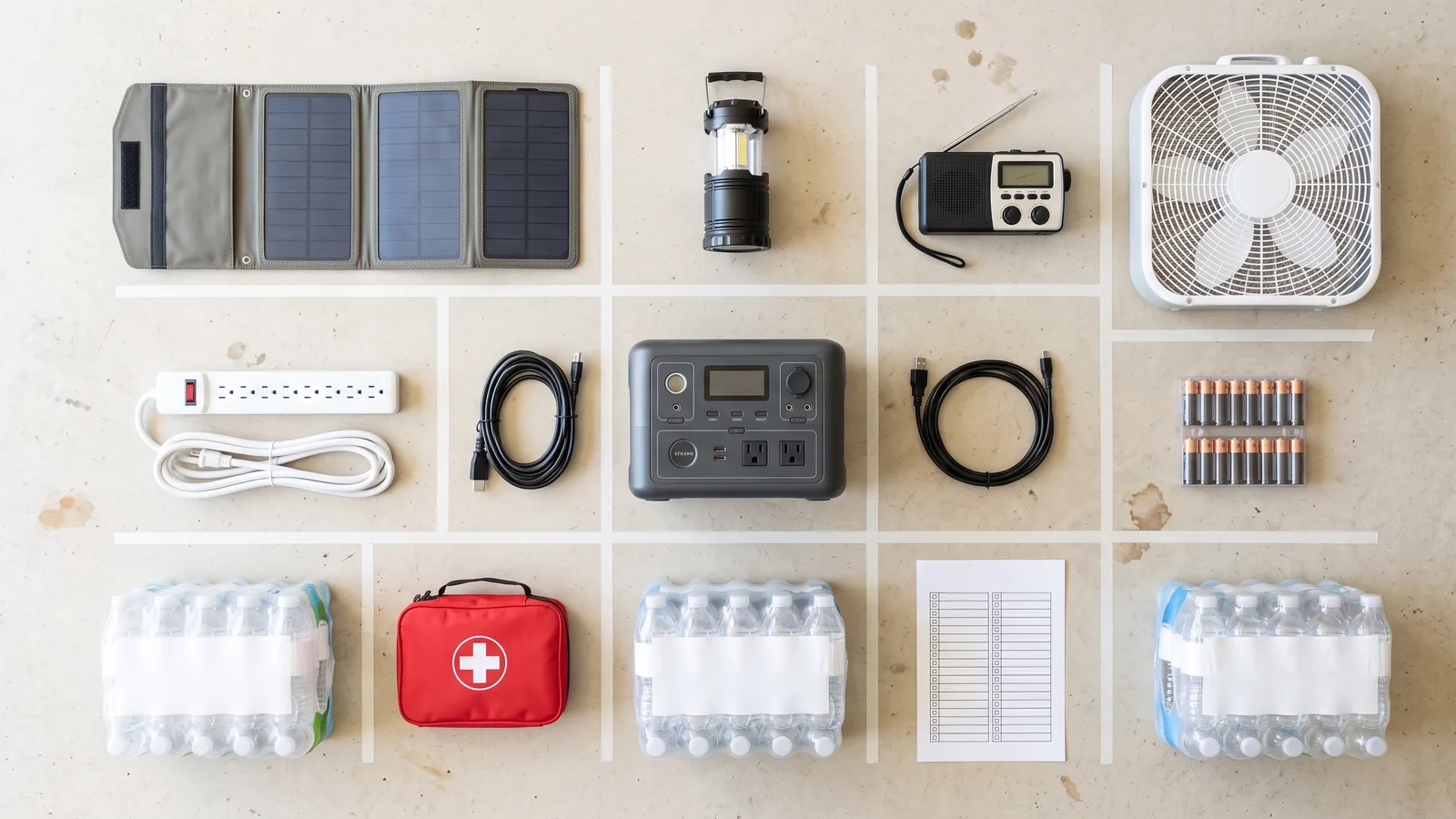
Florida loses power in almost every hurricane season. Sometimes it’s a few hours. Sometimes it’s two weeks. A good power kit is the difference between a mild inconvenience and a stressful scramble.
This checklist covers what to buy, what to charge, and what to do the day before a storm arrives.
Quick picks
- Best all-around power station: EcoFlow DELTA 3 Plus — fast recharge, enough capacity for a fridge and fans
- Best budget option: Anker SOLIX C1000 — solid capacity at a lower price
- Best for whole-fridge + medical devices: Anker SOLIX F2600
- Best headlamp: Black Diamond Spot 400
- Best backup fan: O2Cool 10-inch battery fan
Start with power, not gas
Fuel lines get long fast before a storm, and gas-powered generators are loud, need ventilation, and can run out at 3 a.m. A battery power station charges ahead of time from a wall outlet, so it’s ready before the storm even forms. Many Florida homeowners now keep a power station as their first line of defense and a generator as backup for longer outages.
How much capacity do you need?
| Use case | Recommended capacity | Example unit |
|---|---|---|
| Phones, lights, Wi-Fi router | 300–600Wh | Jackery Explorer 500 |
| Add a fan and CPAP machine | 1,000–1,500Wh | Bluetti AC180 |
| Add a refrigerator | 2,000–3,000Wh | EcoFlow DELTA 3 Plus |
| Whole small-appliance setup | 3,000Wh+ | Anker SOLIX F2600 |
If you’re unsure, buy one size bigger than you think you need. Florida outages regularly stretch past 72 hours, and running a power station at its limit shortens battery life.
The full checklist
Power and light
- Portable power station, fully charged
- Solar panel add-on for multi-day outages (EcoFlow 220W solar panel)
- Headlamps (better than handheld flashlights for hands-free work)
- Battery lanterns for common areas
- Extra rechargeable AA/AAA batteries
- Car phone charger as a backup power source
Cooling and food safety
- Battery-powered fans
- Digital fridge/freezer thermometer to check food safety after an outage
- Cooler and ice packs as a fridge backup
- A plan to keep the fridge door closed as much as possible during the outage
Communication
- Battery or hand-crank NOAA weather radio (Midland ER310)
- Portable phone battery banks, at least 2
- Written list of emergency contacts (don’t rely only on your phone)
Water and sanitation
- One gallon of water per person, per day, for at least 7 days (Ready.gov guidance)
- Water purification tablets or a filter straw as backup
- Battery-powered lanterns for bathroom use at night
Documents and cash
- Cash in small bills — card readers won’t work without power
- Copies of ID, insurance policy, and medical records in a waterproof bag
Charge and test everything before the cone forms
Don’t wait for a hurricane watch to test your gear. Once a system enters the Gulf or Atlantic and starts tracking toward Florida:
- Charge every power station and battery bank to 100%
- Test that your fridge actually runs on your power station (some units can’t handle the startup surge)
- Fill your car’s gas tank
- Check expiration dates on stored water and food
- Charge phones, laptops, and any medical devices
Don’t forget medical needs
If anyone in the home relies on a CPAP machine, nebulizer, or other powered medical device, register with your utility company’s medical priority list ahead of season, and make sure your power station’s continuous wattage rating covers the device. Most CPAP machines draw under 60W, but always check the label.
FAQ
How long will a power station run a refrigerator? A typical 2,000Wh power station can run an efficient refrigerator for roughly 12–24 hours, depending on the fridge’s age and how often the door opens. Pairing the station with a solar panel extends this indefinitely during daylight hours.
Is a power station enough, or do I need a generator too? For outages under 3 days, a well-sized power station plus solar panel often covers essentials like lights, fans, phones, and a fridge. For outages longer than a week, or if you need to run central AC, a fuel-powered or standby generator is usually necessary.
Can I run a power station inside during a storm? Yes. Unlike gas generators, battery power stations don’t produce exhaust fumes, so they’re safe to run indoors. This is one of their biggest safety advantages during a hurricane.
How often should I recharge my power station when it’s not storm season? Manufacturers generally recommend recharging to around 50-80% every 3-6 months if the unit sits unused, to preserve battery health. Check your specific model’s manual for exact guidance.